
Professional Development That Gives Teachers Freedom and Autonomy
Mike Gershon’s Effective Teaching and Learning
The new way to take control of your career, your classroom, and your future, for less than £1.90 a day (free bonuses included)
30 Courses Covering Ten Essential Areas of Teaching and Learning
900+ Classroom-Ready Practical Strategies
A Full Set of Exclusive Member-Only Bonuses*
*All for less than a daily cup of coffee.

- ✅ Mike Gershon’s Effective Teaching and Learning is the teacher professional development platform that gives teachers like you the power to take control of your classroom, your career and your future.
- ✅ This is professional development that puts you in the driving seat, giving you the freedom to decide what matters most. No cohorts, no commitments – beyond what you decide yourself – and no unlocks. Everything is ready and waiting for you to use in a way that fits your schedule, your teaching, and your needs.
- ✅ Discover thirty courses, covering ten key areas of teaching and learning, that give you the tools, techniques and strategies you need to engage your learners, create great progress and take your career where you want it to go.
- ✅ Access over 900 tried-and-tested practical strategies that you can modify, tweak and adapt so they meet the needs of your learners, in your classroom. Suitable for primary and secondary teachers, as well as those teaching in FE, you’ll find concrete examples of how to use the strategies in your setting, with the learners you teach.
- ✅ Covering the areas of teaching and learning that truly matter, like feedback, metacognition and independent learning. As well as differentiation and adaptive teaching, scaffolding, modelling and oracy. Not forgetting AFL, pupil voice, collaborative learning and maximising the impact of TAs. Plus, all members get exclusive access to bonus guides, big picture videos, a full suite of materials for supporting ASD learners, and a growing library of game-changing webinars.
- ✅ Join over 38,000 teachers who have already trained with Mike in-person and online. That’s tens of thousands of teachers who have already tapped into Mike’s world-leading expertise on practical teaching and learning that works. Teachers who have used it to build the careers and futures they want, on their terms.
- ✅ Become part of Mike Gershon’s Effective Teaching and Learning today and gain all this for only £57 per month. No contract, cancel any time. Plus, to give you absolute certainty that this is for you, enjoy your first month half price at only £28.50. No obligation, no strings and no hidden charges. You decide if this is right for you. (We’re truly confident that it will be 😊)
Download Your Overview Today and Discover What You’ll Instantly Unlock As Soon As You Start Your Membership
If we haven’t met before – hi, my name’s Mike 👋.

I’m one of the world’s foremost experts on practical teaching and learning that works.
Since 2010, I’ve worked with hundreds of schools and tens of thousands of teachers, helping them take control of their classrooms, their careers, and build the futures they want.
I’ve also supported governments, schools groups and regional authorities, helping their teachers develop as respected, trusted classroom practitioners.
Every week I provide training in person and online for schools and teachers in the UK and around the world, sharing strategies that work while emphasising the importance of teacher autonomy.
Now I’ve developed an online platform that gives you the opportunity to create the future you want, in the job you love.
On your terms.
All for less than a daily cup of coffee.
And so you know that deciding to become a member of my platform is a choice you will be delighted you made, here’s a potted history of why you can trust me more than anyone to deliver meaningful practical strategies for you and your classroom.
- 🎯 I’ve written 40 books on teaching and learning, selling more than 160,000 copies, and been translated into multiple languages.
- 🎯 My teaching resources have been viewed and downloaded over 4 million times by teachers in 180 countries and territories.
- 🎯 I’ve worked with over 700 schools, as well as governments, charities and regional authorities, supporting teachers across the UK and around the world.
- 🎯 I’ve delivered hundreds of training sessions, mentored countless teachers, and observed in excess of a thousand lessons.
- 🎯 And I’ve produced more than 100 guides to classroom practice, filled with strategies that work.
These days, social media is filled with people who build an audience first and expertise second.
That isn’t how I do things.
I’ve spent fifteen years doing the work, in real schools, with real teachers, before creating something I believe is truly remarkable.
Something designed for teachers like you, working in classrooms like yours.
A professional development platform that combines my two passions.
The two things that have animated my working life for a decade and a half:
- ✅ Practical teaching and learning that works.
- ✅ Professional autonomy for teachers.
Teachers need the freedom to make decisions for themselves.
They – you – are experienced professionals.
Even if you’re just starting out in your career, deciding how to teach the learners in front of you is central to everything you do.
And we all know, all of us who have been in the classroom, that having the freedom and autonomy to follow our instincts and make sound judgements is essential.
Not only for the success of our learners.
But also for the satisfaction and meaning we derive from our work.
The same should be true of professional development.
Teachers should have choice. Freedom. The opportunity to pick the path that is right for them.
And to do so on a platform built around their needs.
One that starts from the premise that teachers deserve the best, and that they should be in control of their own destiny.
Previously, the only way to work with me has been if your school brought me in for an INSET or CPD session.

Over the past decade and a half, I’ve made it my business to master teaching and learning
To unlock not just the secrets of what truly has an impact, but also the practical strategies you can use to bring learning to life, in a way that works for you.
Throughout my work, I’ve stuck to a mantra.
A fundamental principle.
Teachers need autonomy.


They are expert decision-makers.
Skilled professionals who put their learners’ needs first every time they step inside the classroom.
Always looking for ways to make a difference.
Most teachers start off by paying £9K or more for their teacher training.
After that, the vast majority of CPD they receive is chosen for them, delivered to them, and follows someone else’s priorities.

I’ve attended great sessions.
And I’ve delivered many hundreds of them myself, having been on the road for over a decade, travelling around the UK and across the world.
Working with teachers, listening to them, and shaping my sessions so they truly meet their needs.
- ✅ But what if you could take control of your own professional development?
- ✅ What if you could be the one making the decisions, based on what matters most to you, and to your career?
- ✅ What if you could focus on the practical tools that will make a difference in your classroom, for you and your learners?
That’s why I’ve built Mike Gershon’s Effective Teaching and Learning.

It puts you in the driving seat, owning your professional development.
Making my knowledge and skill work for you.
So you can decide how your career develops, what happens in your classroom, and how you make teaching the job you want it to be.
Build Your Expertise, Practical Skill and Professional Knowledge Across Ten Key Areas of Teaching and Learning


Access everything for only £57 a month, less than £1.90 a day.
Plus, to give you the opportunity to make sure the platform meets your needs, enjoy the first month half price, no strings attached.
That means your first month is just £28.50.
50% off.
Because I want you to have the chance to step inside the membership, look around, and feel confident that this is for you.
That taking control of your classroom, your career and your future is the right next step.
And remember, no matter how long you stay on the platform:
- ✅ There’s no contract.
- ✅ There’s no commitment.
- ✅ You can cancel any time.
On Mike Gershon’s Effective Teaching and Learning, you have control.
And you always will.
Here’s a reminder of what you get when you sign up.
30 Courses Covering Ten Key Areas
✅ Designed, produced, and presented so you can leverage my fifteen years’ of expertise and make it work for you, in your classroom, to take your career where you want it to go.
✅ Every course includes exclusive HD videos, a course workbook, optional practical activities, completion certificates, and direct access to my teaching and learning insights. All courses are divided into bite-sized chunks so you can fit them around your schedule and do as much or as little as you like each time you log in.
✅ Plus, every element of every course is available as soon as you join. No unlocks. No waiting around to get to the bits that matter most to you. Unlike on other platforms, you’ll have total control. So you can identify what is most important for your teaching, and go straight there.
Personal Control of Your Professional Future
✅ You decide which courses to study, you choose when to study them, and you identify what matters most for your development as a professional.
✅ Courses are built to fit into your schedule, so you can learn and grow in a way that is unique to you. Dip into a video that resonates with what’s currently happening in your classroom, or move through a course from start to finish. You choose what’s right for you.
✅ No cohorts, no unlocks and no time-limited access. Everything is designed to give you the freedom to follow your professional instincts, and to develop your practice in a way that aligns with your goals.
Over 900 Classroom-Ready Strategies
✅ Ready to use as they are, and ready to adapt and modify so they are shaped for your learners, your unique setting, and the lessons you want to teach.
✅ Each course contains nine or ten videos, in which we work together to explore roughly 30 strategies, looking at how you can make them work in your classroom, for your learners.
✅ You can sit down and master a single course over a few hours, or mix and match the videos across a week or longer, to fit your timetable.
Exclusive Bonus Materials
✅ Ten practical guides that together create your own personal teaching and learning library. You can consult the guides whenever you want, using them to develop your skills and find meaningful ideas for your lessons.
✅ Forty big picture videos you can call on at any time for guidance and support. Use them to stimulate your creative thinking and bring innovative approaches to your classroom that colleagues will want to borrow for themselves.
✅ A full suite of materials focussed on helping ASD learners flourish in mainstream classrooms like yours. Detailed practical guides helping you understand autism and what you can do to best support your autistic learners, plus expert video guidance from experienced practitioners.
Direct Access to the Man Himself
✅ Every member can email me directly to tell me what areas of teaching and learning they want me to focus on next.
✅ Once you’ve signed up, you can tell me what you need to achieve your goals and realise your ambitions – in the classroom and beyond.
✅ The areas for which I receive the most requests will go straight to the top of my list for building new content: resources, webinars, courses and more.
Plus there’s no commitment.
No contract.
And you can cancel any time.
Why?
Because I believe autonomy is crucial to being an effective teacher. And that expert decision-making is where it all begins.
So you decide how long you want to be part of the platform.
You take control.
Join Over 3,000 Teachers Who Have Already Taken Control of Their Professional Development
Teachers from the UK, Europe, Asia, Central America and North America have already been part of the first version of the platform.
They’ve leveraged my skills, my expertise and my knowledge to develop their careers and take control of their classrooms.
I’d love for you to join them.
We’ve used the feedback we had from those 3,000+ teachers to build the new, improved version of the platform you can access today.
Version 2.0.
One in which teacher autonomy runs through every decision we’ve made.
Giving you the freedom to own your professional development and mould it to the needs of your career, your classroom and the future you want to create.
The new platform is simpler, easier to use, and more beautiful.
That last point isn’t something you see very often when talking about professional development.
But for me, making your experience of the platform enjoyable, engaging and delightful is just another way of ensuring you get the highest quality of service when you become a member.
I know how hard teachers work.
How much effort they put into their planning, their preparation and the hours they spend in the classroom, with their learners.
(Not to mention the marking.)
So it’s important to me that your experience of the platform is always a pleasure.
Always uplifting.
In the same way that you create all those uplifting, engaging experiences for your learners.

Turn £57 a Month into £25K in Your Pay Slip
Most teachers, when they first enter the profession, spend around £9,000 on their teacher training.
Mike Gershon’s teaching and Learning is £57 a month.
Plus the first month is half price; £28.50.
50% off, so you can experience the platform and make sure this is the right time for you to take control of your professional development.
That’s less than £1 a day for your first month.
About what you might spend on a bottle of water or a bag of crisps.
If you decide to stay as a member (and I truly believe you will when you see what’s waiting for you inside), £57 a month is less than £1.90 a day.
A cup coffee costs more.
So does a sandwich.
But neither of those has the potential to put money in your pocket.
And I wouldn’t ask you for the monthly subscription unless I was convinced that what I’ll give you in return can change your life as a teacher.
Can give you control, freedom and autonomy over your future
And, maybe, could put £25k or more into your pay slip (though, of course, I can’t guarantee that).
What I can guarantee is this:
- ✅ First, when you sign up to Mike Gershon’s Effective Teaching and Learning, you pay £28.50 in month one, and £57 a month after that.
- ✅ Second, when you sign up, you automatically get the right to cancel any time. There’s no contract. No commitment. You stay on board for as long as you choose.
- ✅ Third, when you become a member, you get unlimited access to a comprehensive suite of professional development materials that prioritise teacher autonomy.
- ✅ Fourth, that includes 30 courses, covering ten key areas of teaching and learning: Feedback, Metacognition, Independent Learning, Differentiation, Scaffolding and Modelling, AFL, Talk, Discussion and Oracy, Collaborative Learning, Maximising the Impact of TAs and Pupil Voice.
- ✅ Fifth, across those courses you’ll find over 900 practical strategies you can use in your classroom, with your learners.
- ✅ Sixth, when you become a member, you get complete, immediate access to a set of exclusive bonuses.
- ✅ Seventh, those bonuses include ten fully designed practical guides, forty big picture videos, and a full suite of materials helping you to support autistic learners in your lessons.
- ✅ Eighth, you get access to me. All members can email me directly and tell me what materials they want me to make next.
- ✅ Ninth, I’m adding in another bonus, because teachers have been telling me they want this. A growing library of webinars focussing on the most pressing challenges in teaching today.
- ✅ Tenth, and I’ve saved this one until last, you get my expertise. My insights. My understanding of practical teaching and learning.
I’ve been doing this for fifteen years.
Training and consulting with hundreds of schools and tens of thousands of teachers in the UK and around the world.
Working with teachers who want the best for their learners, who seek autonomy and respect in their classrooms, and who want to drive their careers forward.
I’ve sold 160,000 books, written in excess of 100 guides to classroom practice, and my free resources have been viewed and downloaded more than 4 million times by teachers in over 180 countries and territories.

I’ve worked with more than 700 schools, observed over 1000 lessons, and trained 38,000+ teachers in person and online.
This isn’t me blowing my own trumpet.
This is me giving you a personal guarantee that Mike Gershon’s Effective Teaching and Learning is built on the firmest of foundations.
On unparalleled expertise around practical teaching and learning that works.
And I wouldn’t dream of telling you all this and leaving it there.
So you can find, on this website, for free, all my resources.
Ready for you to use.
Fully redesigned and updated.
Plus, I’ve taken ten of my bestselling books, edited, revised and rewritten them, and turned them into a knowledge base.
Free.
For you to use.
400+ blogs, guides and articles that will help you in your classroom.
Why?
Because I want you to see for yourself that what I’m offering for £57 a month (no contract, cancel any time, half price for your first month) comes from a place of deep insight, experience and more than a decade of doing the work, in classrooms across the country, with and for teachers like you.
Make Your Future What You Want it To Be

Now, I said that £57 a month with me could put £25k in your payslip.
Sounds outlandish? Let me show you what is possible – though, of course, I can’t guarantee it.
Imagine this …
You join the platform.
You use the courses and the bonus materials to develop your knowledge, skill and understanding around teaching and learning.
A promotion opportunity comes up. One that includes a £5K pay rise.
You apply for the job, ace the interview, and land yourself the new role.
The head and their fellow interviewers are impressed by your grasp of teaching and learning, and your ability to offer practical solutions to challenges teachers face in the classroom.
That £5K pay rise you’ve earned yourself isn’t a one-off.
It repeats.
Every year.
Five years down the line, and the investment you made in the platform would have helped yield £25K in your pay slip.
And when the next opportunity presents itself, any additional bump in salary comes on top of that £5K increase you’ve already earned yourself through your decision to take control of your professional development.
That’s how you can create the career and the future you want.
Now, as I said, I cannot guarantee any of the above.
No one can.
But it illustrates what possibilities are out there.
Waiting for teachers like you to grab hold of them.
And, because the future hasn’t arrived yet, you get to decide what it looks like.
As soon as you sign up to Mike Gershon’s Effective Teaching and Learning, you get access to every course, covering the areas of teaching and learning that truly matter (as well as all the bonus material).
These are the courses that can help you create the future you want.
Along with a career that grows on your terms, and takes you where you want to go.
Let’s take a look at them.
The Feedback Courses


- ✅ Take control of feedback in your classroom. Use it to improve outcomes for your learners, without letting it run rampant over your workload.
- ✅ Understand why your expertise, your knowledge, and your understanding is the core driver of effective feedback, and what this means for how you teach and plan.
- ✅ Discover how to almost guarantee learners implement your feedback, whatever form it takes. Whether that’s verbal or written, delivered in the lesson or when you mark books.
The Metacognition Courses


- ✅ Unlock the secrets of metacognition, and learn how you can weave it into any activity, in any lesson, often with no planning at all. All for the benefit of your learners.
- ✅ Become a master of metacognitive modelling. Recognise the true power of opening up your expertise. Discover how the insights you possess can instantly speed up learners’ progress.
- ✅ Start using proven strategies that enthuse, engage and inspire learners to think about their thinking and take ownership of their learning.
The Independent Learning Courses


- ✅ Stop wondering why your learners aren’t independent and start using strategies that shift their mindsets from wanting to be spoon-fed to wanting to work it out for themselves.
- ✅ Achieve a more independent classroom in which learners delight in taking on challenges. One where persistence, resilience and determination become the norm.
- ✅ Shift the balance so learners do more of the heavy lifting in your lessons, freeing you up to focus on the things that matter.
The Differentiation Courses


- ✅ Gain certainty over what effective differentiation really looks like in practical terms, and why high-quality differentiation has always been synonymous with adaptive teaching.
- ✅ Use my five categories of differentiation to recognise the high-quality personalisation you already deliver, and to give yourself clarity over how to do more.
- ✅ Create improved outcomes for your learners by tailoring the questions you ask, day-in day-out, so they closely match their needs. Little or no planning required.
The Scaffolding and Modelling Courses


- ✅ Instantly transform your understanding of why learners struggle by unlocking the secrets of working memory. Once you grasp this, you’ll never see learning in the same way again.
- ✅ Find new ways to think about scaffolding. Change the dynamic in your classroom and give learners the confidence to embrace and persist with challenges.
- ✅ Break down literacy barriers for any learner using proven techniques to boost confidence, drive engagement, and speed up progress.
The Assessment for Learning Courses


- ✅ Take the complexity out of assessment for learning and discover the simple, timeless truths that sit at the heart of this ageless approach to teaching and learning.
- ✅ Plan lessons that flow beautifully from start to finish, underpinned by a profound understanding of your learners’ needs, and a deep knowledge of how to use AFL in your lessons.
- ✅ Use questioning with newfound purpose to drive learning in your classroom and create a level of interest that supercharges learner engagement.
The Talk, Discussion and Oracy Courses


- ✅ Experience a fundamental reappraisal of the power of discussion. Understand how to use it to engage learners, improve outcomes, and create the conditions for exceptional learning.
- ✅ Discover the remarkably different patterns of discussion you can use to maximise the impact of classroom talk, no matter what you are teaching.
- ✅ Find out why structure is the single most important element of effective oracy, and what that means for your classroom, your learners, and the future of your planning.
The Collaborative Learning Courses


- ✅ Start using collaborative learning in a way that brings a new level of engagement to your lessons, and that creates the conditions for truly memorable learning experiences.
- ✅ Unlock a tried and tested toolkit that ensures any group work you do is focussed, meaningful and successful, maximising the benefits of collaborative learning for your learners.
- ✅ Give free reign to your creativity and use it to craft activities that are innovative, exciting, and huge amounts of fun. Not just for your learners, but for you as well.
The Maximising the Impact of TAs Courses


- ✅ Discover how to look at deployment afresh so that teaching assistants in your classroom have a bigger impact and get greater satisfaction from their work.
- ✅ The four golden rules of behaviour management any teaching assistant can use to deal with any situation (and that every teacher can call on as well). Use these to help your TAs manage behave more effectively and more enjoyably while you get on with teaching.
- ✅ Thirty classroom-ready strategies for improving TA-learner interactions, all of which you can share with your TA and use to finesse your own teaching.
The Pupil Voice Courses


- ✅ Empower learners to feel fully involved in the life of your classroom and see the benefits this brings to their engagement, focus, and determination to succeed.
- ✅ Ensure equity in your pupil voice by breaking down the barriers that prevent some learners from having the confidence to share what they really think about life in school.
- ✅ Understand the different approaches to pupil voice and choose the one that is best suited to you, your learners, and the goals you want to achieve.
An Encyclopaedia of Teaching and Learning – Ready for You to Dive Into
All the courses give you direct access to me through exclusive videos, not available anywhere else.
In these, I open up my fifteen years of teaching and learning mastery for you, giving you the tools you need to develop your career, take control of your classroom and teach the lessons you want to teach.
Together, we’ll unlock key ideas, explore practical strategies and walk through real-life examples.
It’s like having one of the world’s foremost experts in practical teaching and learning by your side, supporting you to achieve your goals as a teacher and as a professional.
On top of that, you’ll find:
- 🎯 Editable and downloadable course workbooks.
- 🎯 Activities you can use to analyse your teaching and develop your practice.
- 🎯 Reflection questions that take you deep into pedagogy and put your thinking about teaching and learning front and centre.
- 🎯 Course certificates that recognise the time and effort you’ve taken to develop your skills, extend your thinking, and take control of your career.
- 🎯 And, of course, those 900 practical strategies (as well as all the bonus materials😊).
Here’s a taster of what’s waiting for you, covering every course that’s on the platform, including a special insight into some of the practical strategies we’ll explore together.
The Feedback Courses
‘Effective feedback gives learners access to your expertise. They use that to target their future efforts more successfully than would otherwise be the case. And that leads to better outcomes.’
- ✅ Discover why nothing is more powerful in your classroom than your expertise and what that means for taking learners beyond the boundary of what they can already do (Part 2 – The Teacher is the Expert).
- ✅ A way of looking at effort that has the power to transform how you and your learners think about the untapped potential in any task you plan (Part 4 – Effort is a Vector).
- ✅ The best way to get learners implementing your feedback and thinking critically about their efforts, no matter what writing activity you plan for them (Part 5 – Write-Do-Reflect).
- ✅ A verbal feedback technique so delightfully simple you won’t believe you’ve never used it before (Part 6 – Tokens).
- ✅ Five ways to speed up your marking while still delivering meaningful feedback. You get to do the things you need to do, while your learners receive the high-quality support they deserve (Part 7 – Written Feedback Alternatives).
‘It’s easier to achieve a goal when you know what you are aiming for.’
- ✅ A strategy devised by a German psychologist and princess (no, really!) that immediately increases the likelihood learners will use the feedback you’ve given them (Part 2 – Mental Contrasting).
- ✅ The secret way to deliver feedback, Jedi-style, in advance of learners even doing the work you’ve planned for them (Part 4 – Pre-Emptive Feedback).
- ✅ Discover why lack of understanding is so often the number one barrier to learners using your feedback and how you can simply and easily remedy this with the minimum of effort (Part 5 – Modelling Feedback Implementation).
- ✅ How to use a tried-and-tested technique to make fast changes to your lessons so learners don’t fall behind their peers and suffer the compounding effects of desperately trying to catch up (Part 6 – Rapid Interventions).
- ✅ Why you need to combine the potency of practice testing with the unadulterated power of feedback to produce outstanding results in your classroom (Part 7 – Practice Testing with Feedback).
‘When you know what you need to do to be successful, everything becomes simpler.’
- ✅ The simplest way any teacher can help learners develop a better understanding of what they need to do to be successful (Part 2 – Articulating What Good Looks like).
- ✅ An approach to success criteria and marking that immediately visualises where learners are succeeding and how they can quickly and easily up their game (Part 3 – Colour Coding).
- ✅ Three examples of how you can reframe success criteria for your learners and instantly change how they view their role in your classroom (Part 5 – Criteria Variations).
- ✅ A peer-assessment strategy that ramps up learner engagement, bringing interactivity and focused evaluation into your lessons through nothing more complex than a sheet of stickers (Part 6 – Coloured Dots).
- ✅ How to use the power of deductive reasoning, Sherlock Holmes-style, to get your learners thinking deeply about one of the most important types of feedback they’ll ever receive (Part 7 – Mistakes Feedback Match).
The Metacognition Courses
‘Metacognition means thinking about thinking. When learners reflect on their thinking, they’re in a position to change it, refine it, and make it better.’
- ✅ Seven powerful approaches you can use to unlock your expertise and potentially change the fundamental nature of how your learners think about learning (Part 2 – Modelling Thinking).
- ✅ The #1 easiest way to break down metacognition so you know where your learners are at, where you want to take them, and how you’re going to get them there (Part 5 – Four Levels of Metacognitive Learner).
- ✅ Five examples of how you can transform metacognition from abstract ambiguity to concrete reality for every learner you teach (Part 6 – Making Metacognition Concrete).
- ✅ A technique that just might be, pound-for-pound, the simplest, most effective way to get your learners thinking and talking about the strategies they use when they’re learning, whether they’re 5, 10 or 15 years old (Part 7 – Strategy List).
- ✅ The extraordinarily simple way to make metacognition part of any task you ever plan, teach, or share with your learners (Part 8 – Three Times for Metacognition).
‘The teacher is the expert. Giving access to your expertise benefits all learners. It helps them to change their thinking and to learn from the master who is already in the room. You.’
- ✅ Four ways any learner can map out their thinking, giving them an instant visualisation of the knowledge and understanding currently developing in their minds (Part 2 – Mapping Thinking).
- ✅ How any learner can use the visualisation of thinking as a secret tool to circumvent the biological limitations of working memory (Part 3 – Graphic Organisers).
- ✅ Why you are the most powerful force for learning in your classroom and how you can unlock your expertise for learners, day after day, simply through how you talk (Part 5 – Modelling Thinking for Your Learners).
- ✅ An unparalleled selection of over 90 keywords you can use to craft a new language of thinking in your classroom, that will get learners talking in a profoundly different way about their learning (Part 6 – The Language of Thinking).
- ✅ A method for unlocking the processes of thinking that has been in use for at least two millennia, and which still retains its power to transform learners’ thinking today (Part 8 – Annotated Exemplars).
‘Embedding metacognition is all about habits. Getting learners into the habits of reflecting on their learning, thinking about their thinking, and monitoring their own efforts. When that happens, good things follow.’
- ✅ Five powerful ways you can weave metacognition into any lesson, with little or no planning, so learners start diving beneath the surface and exploring the hidden depths of their learning (Part 2 – Metacognitive Check-Ins).
- ✅ Why many teachers spend most of their career talking as if there is only one type of mistake, when they could be talking about the different types of mistakes that exist, and letting learners in on the secret as well (Part 3 – Delineating Mistakes).
- ✅ How to turn your learners into metacognitive detectives who sleuth through their work in search of hidden insights they can use to supercharge their own progress (Part 6 – Past Work Analysis).
- ✅ Discover the simple tweaks to your questioning that subtly encourage your learners to be more reflective, more engaged with their learning, and more metacognitively aware, without even realising it (Part 7 – Metacognitive Questioning Part 1).
- ✅ Twenty-five oven-ready questions you can pick up, put in your question bank, and use in your lessons to get your learners thinking metacognitively, no planning required (Part 8 – Metacognitive Questioning Part 2).
The Independent Learning Courses
‘Independence is to activity as dependence is to passivity. The independent learner will always tend towards the active. And that is what we want.’
- ✅ A strategy so fiendishly simple you’ll wonder why you’ve never done it before – and won’t believe how easy a technique it is to make your learners more independent (Part 4 – Establishing an Independence List).
- ✅ An approach to dealing with questions and queries that will not only stop learners in their tracks but will also make them desperate to find out the answers for themselves, instead of always coming to you first (Part 5 – Refuse to Answer).
- ✅ A technique you can use over and over again, in any setting, with any group of learners, that will have you prioritising independent learning without even having to think about it (Part 6 – The Scaffolding Ladder).
- ✅ A starter activity that uses the combined power of personalised feedback and targeted effort to set the tone for independent learning from the first moment learners sit down and open their books (Part 7 – Target Revisit and Self-Assessment).
- ✅ An approach to marking that lowers your workload, increases your impact, and straps jet-fuelled rocket boosters to learner independence (Part 8 – Tell Me What to Mark and Why).
‘To truly empower learners, we as teachers have to relinquish some of our control.’
- ✅ A fundamental psychological concept so powerful that once you truly understand it, you’ll never look at learner independence the same way (Part 1 – The Locus of Control).
- ✅ Over a dozen examples of classroom tools you can make, create or maybe even already have, that empower learners to take control of their learning and become more independent (Part 2 – Creating a Tool-Rich Classroom).
- ✅ An approach to scaffolding that magically removes the teacher (and the TA) from the equation yet still produces outstanding results (Part 3 – What is self-scaffolding?).
- ✅ Why reigning in your feedback and giving learners a greater role in working out what they need to do to improve can actually make your life easier at the same time as it empowers the children you teach (Part 5 – Learners Setting Targets).
- ✅ An open-ended activity that puts the ball in the learner’s court, helping satisfy the fundamental need for autonomy every human being possesses (Part 7 – Options and Choices).
‘Beliefs influence thoughts. Thoughts influence actions. Actions are what we see from learners in our lessons. All three are open to change.’
- ✅ Why thinking about the surface of a mouse’s brain is a remarkable way to unlock the supreme potential for learning that sits inside every human being (Part 1 – How would you describe your brain?).
- ✅ Hands down the simplest approach to understanding how a learner’s mindset influences their thoughts, the decisions they make, and how they act in your classroom (Part 2 – Growth Mindsets vs Fixed Mindsets).
- ✅ Why unlocking the secrets of goal-orientation shines a powerful light on how your learners think about learning, and what this means for how they make sense of the tasks you plan for them (Part 4 – Mastery vs Performance).
- ✅ The #1 starting point for getting learners to change how they talk about independence, and why shifting their language is the first step to shifting their behaviour (Part 5 – The Language of Independence).
- ✅ Six ways any teacher can change how learners look at learning and potentially generate extraordinary shifts in the effort, enjoyment and engagement they show in your lessons (Part 7 – Reframing Learner Thinking).
The Differentiation Courses
‘Personalisation comes from how the teacher adapts the learning based on their knowledge of learners’ needs. That’s why the teacher is always the most important resource in the room.’
- ✅ Stop differentiation feeling like a tangled knot of complexity and start seeing it as an uncomplicated thread of simplicity that runs through all aspects of great teaching and planning (Part 1 – Rethinking Differentiation).
- ✅ Unlock a way of thinking about differentiation that removes almost all the pain from planning, and which helps you recognise examples of personalisation in your own teaching you never even knew were there (Part 2 – Subdividing Differentiation).
- ✅ Experience a formidable tool for differentiating practical activities that many teachers go their whole career not knowing about, and which you can start using almost as soon as you’ve discovered it (Part 4 – Differentiating Activities).
- ✅ How to pose three questions to any learner in any lesson that will take them from low-level thinking to high-level thinking in a matter of seconds – no planning required (Part 5 – Differentiating Questioning).
- ✅ Five failsafe strategies for scaffolding listening that help learners who are struggling with their literacy, or their English language acquisition, to immediately feel more confident, more independent, and more in control of their learning (Part 8 – Differentiating Words and Writing).
‘How you ask a question is often as important as what the question is asking.’
- ✅ Why changing the rules of the questioning game is a miracle teaching tool that can instantly take learners from unresponsive to super-engaged (Part 1 – Differentiated Questioning).
- ✅ A way of coming up with questions that means you can personalise the level of challenge for any learner, in any lesson, in the moment, with the minimum of effort (Part 2 – Structuring Tools).
- ✅ One way to do whole-class questioning that automatically annihilates social awkwardness and means every learner in the room knows precisely what you want them to do (Part 4 – Whole-Class Questioning).
- ✅ How ten minutes work can lead to twenty-five years of benefits by allowing you to create a question that becomes a hugely influential fulcrum in your lessons, and remains relevant for at least a quarter of a century after you’ve planned it (Part 7 – Hinge Questioning).
- ✅ Exactly what to do if you want to leverage an approach to questioning that has retained its extraordinary power for over 2400 years, predating Leonardo da Vinci, Isaac Newton, and even the birth of the Roman Empire (Part 8 – Socratic Questioning).
‘Challenge means something different for all learners. Yet what remains the same is the sense that we are helping learners to push back the boundary of what they can do, whatever their starting point may be.’
- ✅ The single most effective way to think about differentiation in practical terms, what this means for supporting your less-able learners, and how you can use it to help them experience success in your classroom (Part 1 – Subdividing Differentiation).
- ✅ Why understanding the key relationship at the heart of human memory is crucial to effective personalisation, and why this is even more vital when it comes to supporting the less-able learners your teach (Part 2 – Scaffolding Learning).
- ✅ How you can use a decades-old graphic organiser to up the pace of your less-able learners’ new word acquisition, helping them to expand their vocabulary more easily, more quickly, and more effectively (Part 3 – The Frayer Model).
- ✅ The secret behind applying not one, not two, but three powerful taxonomies, each of which can help you effortlessly discover the right level of challenge for every learner you teach, no matter their current ability level (Parts 5, 6 and 7).
- ✅ Exactly what you need to do to use the students who are already sat working in your classroom as a tool that has the potential to radically transform the in-lesson experience of your less-able learners (Part 8 – Peer Tutoring).
The Scaffolding and Modelling Courses
‘Working memory is limited. For everyone. So much of the scaffolding and modelling we do as teachers is about helping learners to overcome this limitation.’
- ✅ The completely overlooked yet incredibly powerful method for making sense of how learners feel when the level of challenge outstrips their current level of skill (Part 1 – The Learner’s Experience of Learning).
- ✅ A game that demonstrates the limitations of working memory so simply, and with such immediacy, that you’ll wonder why you’ve never used it before with your learners (Part 2 – Exploring Working Memory).
- ✅ An approach to scaffolding writing that instantly focuses every learner in the room on improving both the quality and the range of vocabulary they are using in their written work (Part 3 – Keywords Word Bank).
- ✅ Five examples of how to turn abstract tasks into concrete learning and immediately decrease the level of complexity for any learner who needs it (Part 5 – Concrete Scaffolding).
- ✅ The four essential pillars that must be in place for modelling to have the impact you want it to have, whether you are teaching a three-year-old child how to throw a ball or showing a forty year-old neurosurgeon how to carry out keyhole brain surgery (Part 7 – Modelling Fundamentals).
‘In any situation, there are always two ways we can scaffold for our learners. By decreasing the level of challenge. Or by increasing the level of learner skill.’
- ✅ How to use the innate power of human evolution to help any learner refine, modify and upgrade their thinking before they even get close to putting pen to paper (Part 2 – Verbal Rehearsal).
- ✅ Nine ready-made metacognitive questions any teacher can use to train their learners in how to improve their writing, reflect critically on their ideas, and enhance the quality of their written communication (Part 3 – Scaffolding Writing – Part 2).
- ✅ More than a dozen tools channelling the power of scaffolding that give learners the chance to fully engage with speaking and listening in your classroom, whatever their current literacy levels (Parts 5 and 6).
- ✅ A method for making sense of reading that predates the invention of Windows 2.0, Nike Air Max trainers and Magnum ice creams, and which has never been superseded due to its remarkable explanatory power (Part 7 – Scaffolding Reading – Part 1).
- ✅ The #1 easiest set of strategies any teacher can use to strap a jet pack onto reading comprehension whenever they are working with five learners or fewer (Part 8 – Scaffolding Reading – Part 2).
‘Modelling is inherent to human learning from the moment a child is born. At all stages of education it is a powerful tool the teacher can call on. One that invokes the essence of our nature.’
- ✅ Discover how one visionary psychologist unlocked the power of social learning, providing generations of teachers with the four things necessary to ensure modelling works in any situation (Part 1 – Practical Modelling).
- ✅ Why a goldfish bowl could provide you with your next great modelling opportunity – and what kind of impact this could have on your learners (Part 2 – Peer Modelling).
- ✅ Five lesser-known strategies that are frequently overlooked by teachers who get bogged down in the ‘traditional’ ways of doing peer-assessment, but which you can use to dial up increased motivation and stronger engagement in your lessons (Part 3 – Peer-Modelling Through Peer-Assessment).
- ✅ An approach to the modelling of writing that brings to the surface the secret rules and methods nearly every learner struggles with at some point during their school career (Part 5 – Genre Modelling).
- ✅ A technique for modelling definitions that is so influential it has been discussed by some of the greatest philosophers of the last 400 years, yet which is so simple to use we can call on it in any lesson, with any group of learners, at almost any time (Part 7 – Ostensive Definitions).
The Assessment for Learning Courses
‘Assessment for learning is simple. Let me show why that is and what it means for your classroom.’
- ✅ How to take all the complexity associated with assessment for learning, chuck it in the recycling bin, and be left with the beautiful simplicity that sits at its core (and that you can use to drive progress in every lesson you teach) (Part 1 – Unlocking AFL).
- ✅ The one strategy any teacher can use that instantly simplifies the process of adapting your planning, making it easier than ever to tailor your lessons to the needs of your learners (Part 2 – Eliciting and Using Information).
- ✅ Hands down the most powerful element of assessment for learning, discover why this pillar of effective practice is the pivot on which all our teaching efforts hinge, and how you can make it central to your work in the classroom (Part 5 – Giving Formative Feedback).
- ✅ Exactly how you can use the likes of Vincent Van Gogh, John Steinbeck and J.K. Rowling to radically change how your learners think about the value of feedback (Part 6 – Giving Formative Feedback Examples).
- ✅ Fifteen ways any teacher can open up success criteria so that learners end up doing all the work while they stand back and facilitate (Part 8 – Opening Up Success Criteria Examples).
‘The more accurate your understanding of where your learners are at, the easier it is to meet their needs. And to teach lessons that flow beautifully from start to finish.’
- ✅ Why understanding the core pillars of assessment for learning means knowing that every teacher’s work begins with the humble process of collecting information, and that this can take a surprisingly large number of forms (Part 1 – Eliciting and Using Information).
- ✅ How to create a silent conversation with any learner you teach that gives you an edge in understanding what they need from you, where they are at with their learning, and whether the current level of challenge is hitting the mark (Part 2 – Written Conversations).
- ✅ An impossibly easy approach to getting information from groups that requires nothing more complex than the ability to count (Part 3 – Group Numbers).
- ✅ Five techniques that bring a desirable degree of randomness into your classroom, but which don’t mean giving up control of the learning or letting the lesson drift from the path you need it to follow (Part 6 – Eliciting Information Randomly).
- ✅ More than two dozen examples of how an AFL mindset leads to teaching that is driven by an intuitive understanding of learners’ needs, in which current and future learning is shaped and sculpted to maximise engagement – and help all learners achieve their goals (Parts 7 and 8).
‘How you structure, frame and pose your questions is instantly interpreted by your learners. When you adapt your questioning, you change how learners think about what you’re asking.’
- ✅ How you can use mud to access the most important information you need to hear if you want to effectively tailor your teaching (without getting a scrap of dirt on any of your clothes) (Part 2 – Diagnostic Questioning – Whole Class).
- ✅ The one question any teacher can ask that transforms how learners think about a set of potential answers, and shifts them from guessing at random to thinking with care (Part 3 – Diagnostic Questioning – Groups and Individuals).
- ✅ A clever way to plan your next assessment that guarantees you’ll get access to information that truly reveals how well learners have understood what you’ve taught them (Part 6 – Hinge Questioning – Groups & Individuals).
- ✅ An approach to question-planning that makes providing differentiated challenge to your learners as easy as following a recipe written for a five-year-old (Part 7 – Written Questioning Techniques).
- ✅ Fifteen ways to add variety and interest to think-pair-share, and how to use these to get learners thinking about two of the most vital elements of all learning: mistakes and misconceptions (Part 8 – Questioning Around Mistakes and Misconceptions).
The Talk, Discussion and Oracy Courses
‘Verbal rehearsal is at the heart of effective discussion. Learners build knowledge together, but they also engage in focussed practice. And the power of practice is plain for all to see.’
- ✅ How a nineteenth century French essayist summed up the benefits of discussion in a way that is truer today than it has ever been before, and what this means for the learners you teach (Part 1 – Why does discussion matter in the classroom?).
- ✅ A technique for stimulating talk that calls on the primal power of the unexpected to fire up the brain’s attention centre, giving you an instant strategy for engaging any group of learners in meaningful discussion (Part 2 – Verbal Rehearsal).
- ✅ A beautifully elegant oracy activity that ensures every learner has multiple opportunities to speak (and listen to their peers), without the need for endless presentations in front of the whole class (Part 5 – Concentric Circles).
- ✅ Hands down my favourite discussion activity for getting groups of learners mingling together, interacting with each other, and talking to peers with whom they might not normally spend time (Part 6 – Person Bingo).
- ✅ Discover eleven ways you can leverage the power of speech so your learners put pen to paper faster, write with greater clarity, and produce work that is fundamentally better than it otherwise would have been (Part 8 – Using Discussion to Precede Writing).
‘When you change the rules, you change the discussion.’
- ✅ Why almost every discussion you have in your classroom can be classified in one of three ways – and why understanding what these are opens the door to a salmagundi of new possibilities (Part 1 – Three Different Types of Talk).
- ✅ How you can harness the power of ‘having a barney’ and target it with laser-like precision so your learners develop their ability to reason like lawyers (Part 3 – Disputational Talk Examples).
- ✅ Exactly what you need to do if you want to create a safe, supportive atmosphere in your classroom where learners feel they can express themselves in an authentic way (Part 5 – Making Sense of Cumulative Talk).
- ✅ Understand why one particular type of talk demands more of your time, more of your attention, and more of your thinking than any others, and what this means for the future of your planning and the development of your learners’ oracy skills (Part 7 – Analysing Exploratory Talk).
- ✅ A wonderfully simple yet deceptively challenging discussion activity that works just as well with eight-year-olds as it does with 18-year-olds (or even fully grown adults) (Part 8 – Rank the Questions).
‘To be effective, discussion needs structure. How much is for you to decide.’
- ✅ Six ways you can keep discussion on track, keep learners engaged, and maximise the impact of your chosen discussion activity, whatever you are teaching and whoever your learners are (Part 1 – Structuring Classroom Discussion).
- ✅ A psycho-social phenomenon so powerful that it has the potential to undermine any discussion task you plan for your learners – but which you can get ahead of and neutralise if you know how (Part 2 – Social Loafing).
- ✅ One of my all-time favourite ways of structuring discussion for any group of learners, this activity brings together mystery, interactivity and time pressure to create a wonderfully engaging experience in classrooms of all shapes and sizes (Part 5 – Card Talk).
- ✅ A blow-by-blow visual guide showing how to deploy a sophisticated, yet seemingly simple, discussion activity in your lessons, along with seven bonus strategies you can use to further increase its impact (Part 6 – Envoys).
- ✅ The best discussion activity to use if you have a class who like to work together, who are happy to try new things, and who don’t mind getting stuck into challenges that give a direct boost to independent learning (Part 8 – Rotating Stations).
The Collaborative Learning Courses
‘At its best, collaborative learning is both a means and an end in itself.’
- ✅ 20 examples of how you can plan collaborative learning that produces great outcomes, runs as smoothly as a brand-new car, and gets learners deeply engaged with the ideas and information you want them to think about (Part 2 – General Planning Considerations).
- ✅ A delightful strategy for creating groups that involves one of the world’s most famous toys, a small bag, and a perfectly proportioned measure of randomness (Part 3 – Creating and Refining Groups).
- ✅ Immediately accessible visualisations of three winning approaches to activity planning, each of which provides an optimal level of structure to make collaborative learning fly in your classroom (Part 5 – Activity Planning).
- ✅ What to do if you need to sprinkle an extra bit of structure into your collaborative learning mix, including a technique that instantly shows any learner precisely how much progress they’ve made, giving them clarity over what they need to do next (Part 7 – Tools to Provide Structure).
- ✅ How to channel the sublime power of mystery, as used by Penn and Teller, Agatha Christie, and Steven Spielberg, to ramp up learner excitement about your next collaborative learning activity (Part 8 – Three Envelopes).
‘Collaborative learning is as much about the collaboration as it is about the learning. And some learners need more support with that than others.’
- ✅ Super reliable solutions to not one, not two, not three, but ten familiar problems that have the potential to derail collaborative learning in any classroom, with any group of learners (Parts 2 and 3 – Common Problems and Solutions).
- ✅ Six metacognitive questions that are guaranteed to give learners a reflective boost, help them think critically about their learning, and change how they view the next collaborative learning activity you plan for them (Part 5 – Self-Questioning).
- ✅ A simple way you can flip the dynamic of any group of learners that instantly changes how they make sense of their roles and the things they need to do as a team to be successful (Parts 6 and 7 – Assigning Roles).
- ✅ The exact role you need to assign to one of your learners if you want to see improvements in the quality of work their group are producing, regardless of what topic you are teaching (Parts 6 and 7 – Assigning Roles).
- ✅ How to use a single strip of paper to completely reframe learner perceptions of a collaborative learning activity, immediately increasing their ability to self-regulate and stay on task (Part 8 – Teacher Techniques).
‘Collaborative learning offers great scope for teachers to be creative with their planning, and with how they innovate during the lesson itself.’
- ✅ Channel Tom Cruise’s most famous movie franchise of all time with a technique that puts learners in the role of Ethan Hunt, only without the exploding buildings and live action stunts (Part 2 – Secret Missions).
- ✅ Take a cue from some of the most successful kids’ books of the late 80s/early 90s (that sold 250 million+ copies) and use their magic formula to fire up learner excitement in your classroom (Part 5 – Choose Your Own Adventure).
- ✅ Discover an approach to collaborative learning that has lain dormant for many years, yet which offers the tantalising prospect of transforming your classroom into a space station, a dinosaur’s playground, or just about anything you and your learners have the ability to imagine (Part 6 – Mantle of the Expert).
- ✅ Start using a collaborative learning technique based on a game first written about more than seven hundred years ago, one that presents learners with practically no alternative but to take part and engage positively with their peers (Part 7 – Simple Innovations Part 1).
- ✅ An innovation many teachers are reluctant to try but which the brave ones use to completely shake up their class dynamic and their planning, creating deeply memorable learning experiences in the process (Part 8 – Simple Innovations Part 2).
The Maximising the Impact of TAs Courses
‘Getting away from the ‘Velcro’ model of teaching assistant deployment is crucial if you want to have the biggest impact on learner outcomes.’
- ✅ A set of barriers that regularly shrink the impact of teaching assistants working in schools of all types, often without anyone even realising it, but which you have the power to overcome in your school today (Part 1 – Barriers to Effectiveness).
- ✅ If you have a teaching assistant in your lessons for two or more hours a week, these research-backed recommendations have the potential to completely transform how you and they work together in your classroom, with your learners (Parts 2, 3 and 5).
- ✅ The #1 easiest way to ensure you and your TA always have calendared time in which to meet so you can talk about your lessons and your learners, free from any other demands, distractions or pressures (Part 6 – TA-Teacher Golden Time).
- ✅ An approach to deployment that can revolutionise how your classroom functions, how learners perceive teaching assistants in your lessons, and how much fulfilment your TA gets from their job (Part 7 – The Helicopter Model).
- ✅ Why one of the most important elements of any intervention run by a teaching assistant is what happens when the learner comes back into your classroom, and how helping them make links is essential to them consolidating their learning (Part 8 – Structured Interventions).
‘Always remember the 4 C’s of Positive Behaviour Management: Clarity, Consistency, Communication and Calm. You can call on them in any situation, with any learner.’
- ✅ How I use four simple words to remind myself of everything I need to do whenever I’m managing behaviour in a classroom – and how you and your teaching assistant can use them to make your lives easier and behaviour management more enjoyable (Part 1 – The Golden Rules).
- ✅ Why we’re far more likely to do things for people we have a relationship with and why understanding this means knowing that it is always possible to manage behaviour positively – and with a smile on your face (Part 2 – Building Rapport).
- ✅ The one-word tweak any teacher or teaching assistant can use to produce outsized impacts on learner behaviour, without learners even being aware that anything different has happened (Part 4 – Language for Positive Behaviour).
- ✅ Understand how learners can sniff out false praise – and what this means for how you need to use praise when you’re managing behaviour in the classroom, whether you’re a teacher, a teaching assistant or anyone else (Part 5 – Using Praise).
- ✅ Discover why every behaviour scenario in every classroom always contains two choices, and how TAs and teachers can ensure they give learners the chance to make the right choice every single time (Part 7 – Responding to Poor Behaviour).
‘A great rule of thumb when working with learners is to always give the least amount of help first. That way, you prioritise independence while still being on hand to offer support.’
- ✅ Uncover the five fundamental aspects of teaching and learning that subtly shape all our efforts to support learners, and why understanding these is the first step to mastering effective interactions (Part 1 – Teaching and Learning Tools).
- ✅ Why pretending you don’t have a clue what is going on, what is being said, or what a learner is trying to tell you can be a fiendishly good way of improving your questioning and getting learners to work harder than you (Part 2 – Questioning Techniques).
- ✅ The simple sentence that, when used religiously, is almost guaranteed to maximise independence for every learner you work with (Part 4 – Scaffolding Strategies).
- ✅ Discover the straightforward, seven-word question you can use any time you give verbal feedback to help guarantee it has the impact you want, whether you’re talking to a learner about nuclear physics or place value (Part 6 – Verbal Feedback Techniques).
- ✅ Find out why teaching assistants who can draw a triangle are almost always able to increase the odds that a learner will respond to a question, and what this means for scaffolding learning when learners are struggling to make sense of the work (Part 7 – Effective Ways to Elicit Responses).
The Pupil Voice Courses
‘When learners have a voice, we create the opportunity for empowerment, and all the possibilities that brings.’
- ✅ How to understand and overcome the five most common pitfalls any teacher faces when introducing pupil voice to their classroom for the first time (Part 2 – Listening to and Considering Learner’s Opinions).
- ✅ The single best way to show your learners what it means to be fully involved in the community and life of their school, and how they can make a positive difference to those around them (Part 4 – Modelling Participation and Involvement).
- ✅ Why enhancing your use of pupil voice can be a quick and lasting way to increase the level of engagement and motivation you see from learners in every lesson you teach (Part 5 – Increasing Learner Engagement).
- ✅ Three examples of how pupil voice can tip the scales of learner-teacher interactions, fostering positive relationships that ultimately lead to better outcomes, and better learner experiences (Part 7 – Improving Learner-Teacher Relationships).
- ✅ The most important things you need to avoid if you want to use pupil voice to improve communication between you and your learners – and what you can do to make sure these traps don’t undermine your plans (Part 8 – Enhancing Communication).
‘Pupil voice in the classroom changes the dynamic. This often produces results that are both unexpected and surprising.’
- ✅ The two mistakes you must avoid if you want pupil voice to have genuine meaning for your learners, and what happens when teachers aren’t aware of these potential roadblocks (Part 1 – Developing Pupil Voice at a Classroom Level).
- ✅ Discover why overly prescriptive questions can destabilise your pupil voice efforts – and how to ensure this situation never develops in your classroom and doesn’t undermine any of the hard work you put in (Part 2 – Learner Surveys).
- ✅ Five ways you can use suggestion boxes to draw out comments and generate proposals from even the most reserved learners, ensuring everyone in your classroom truly has a voice and feels like that voice is heard (Part 5 – Suggestion Boxes).
- ✅ How to use learning reviews to get learners sharing honest feedback you can use to make meaningful changes to your lessons, without feeling like something else is being added to your planning (Part 6 – Learning Reviews).
- ✅ A minimal-planning plenary that puts the onus on learners to think judiciously about what they value most, what direction they want their future learning to take, and why they think this (Part 7 – Pupil Voice Plenaries).
‘Empowering learners to share their voice binds them into the school community and creates meaning of its own.’
- ✅ The three things every teacher must consider if they want to run a school council that inspires learners to believe in the power of positive change (Part 2 – Establishing and Developing a School Council).
- ✅ Ten examples of roles you can establish that give learners the opportunity to take on genuine responsibility within your school community, play a positive role in the life of your school, and know that their voices are being heard (Part 4 – Learner Roles).
- ✅ The most important questions any school needs to ask if they are even considering bringing pupil voice into the recruitment process, and why this approach to pupil voice has the potential to be hugely impactful for your learners (Part 5 – Involving Learners in Recruitment).
- ✅ How you can tap into the storied history of investigative journalism to give learners a voice in your school, develop their literacy skills, and create an opportunity for pupil voice that will stand the test of time (Part 6 – Establishing a Student Newspaper).
- ✅ Discover the four-step process you can start using today to ensure any pupil voice you introduce, or are already using, is equitable, accessible and meaningful for every single learner you work with (Part 8 – Ensuring Access for All).
Claim Your Exclusive Member-Only Bonuses Today

I want to make sure you receive exceptional value when you join me on the platform.
And that you have everything you need and more to take control of:
- 🎯 Your Classroom
- 🎯 Your Career
- 🎯 And Your Future
That’s why I’m including a set of carefully selected bonuses for you, to complement the thirty courses.
Together, these give you:
- ✅ Practical strategies you can pick up and use in your lessons, to support your learners and create great progress in your classroom.
- ✅ Different ways to think about and reflect on your practice in the ten key areas, so you can deepen your mastery of teaching and learning.
- ✅ An in-depth understanding of how autism affects learners’ experiences of school, and how you can best support any autistic learners you work with – now and in the future.
- ✅ Practical answers to the most pressing challenges and questions teachers are facing in their classrooms today.
Let’s have a look at everything you get when you sign up.
Bonus 1: Ten Practical Guides




- ✅ Your very own teaching and learning reference library.
- ✅ This is an opportunity for me to share key ideas and practical strategies with you from a new perspective.
- ✅ Ten Practical Guides, weighing in at over 200 pages, covering the areas of teaching and learning we look at in the courses.
- ✅ Examples from across the Key Stages and the curriculum showing you how to bring the strategies to life in your lessons, with your learners.
- ✅ Read at your leisure, on any device. You can download the fully designed guides or read them online, giving you flexibility to use them in a way that works for you.
Bonus 2: Forty Big Picture Videos




- ✅ Your own personal video reference library, sitting alongside the courses and the guides, helping you create the career path that takes you where you want to go.
- ✅ Four videos for each of the ten areas of teaching and learning, giving you bite-sized insights and ideas that are easy to implement in your classroom.
- ✅ Use the videos to take control of your planning and teaching through critical reflection that leverages my fifteen years’ of expertise.
- ✅ Deepen your mastery of teaching and learning by using the videos to stimulate your thinking, reflect on your lessons, and identify the ideas that matter most to you.
- ✅ Enjoy full transcripts of every video, giving you another way to access the ideas that doubles up as an additional written library of teaching and learning insights.
Bonus 3: Full Suite of Supporting ASD Learners Materials


- ✅ Tap into the expertise of specialists who can guide you in how to effectively support autistic learners in mainstream lessons.
- ✅ Master your understanding of this complex topic and gain confidence in how to work with autistic learners in an inclusive and meaningful way.
- ✅ Three guides and seven videos giving you detailed practical insights into what life is like for autistic learners in both primary and secondary schools.
- ✅ Dozens of practical strategies you can use, modify and adapt to meet the needs of your autistic learners and help them feel at home in your lessons.
- ✅ Expert guidance on how to adapt lessons, interactions, and the learning environment to make school more enjoyable and supportive for your autistic learners.
Bonus 4: Growing Webinar Library
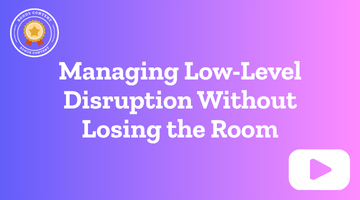
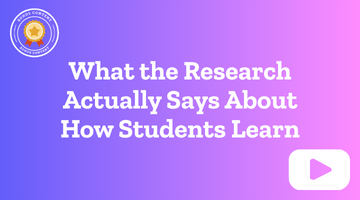
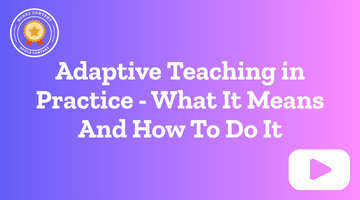

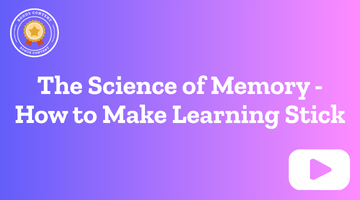



- ✅ A growing library of webinars focussed on the most pressing questions and challenges teachers are facing in classrooms today.
- ✅ The library will be live on the platform from August 2026, with a starting total of over 30 webinars, including all those listed above.
- ✅ Get practical answers you can use to solve problems and overcome challenges in your classroom.
- ✅ Think deeply about the nature of modern teaching and the changing face of classroom practice.
- ✅ Unlock priority access to all new webinars, as well as the chance to suggest topics to Mike for future recordings.
Three Promises I Make to You

I built Mike Gershon’s Effective Teaching and Learning so I could share my expertise with educators around the world.
Giving teachers like you the tools you need to take control of your career, your classroom, and your future.
My focus is on helping you to achieve your goals, realise your professional autonomy, and master teaching and learning.
As part of that, I make three promises to you, and everyone who joins the platform.
Promise One
When you sign up to the platform, you’ll get access to:
- ✅ All 30 courses, covering 10 key areas of teaching and learning.
- ✅ Over 900 practical strategies and techniques, included in the courses.
- ✅ Bonus 1: The Ten Practical Guides.
- ✅ Bonus 2: The Forty Big Picture Videos.
- ✅ Bonus 3: The Full Suite of Supporting ASD Learners Materials.
- ✅ Bonus 4: Growing Webinar Library (from August 2026)
I won’t guarantee that every single strategy I share will work for you.
In fact, I guarantee that some won’t.
You’ll see some strategies and think, ‘I’m not sure that’s right for me and my learners’.
And that’s exactly how it should be.
Teachers are different. Schools are different. Learners are different.
If someone tells you everything they share can work for everyone, they don’t understand the nature of teaching.
But what I can guarantee, is that you will be able to use the vast majority of the strategies we explore together.
Sometimes exactly as they are, sometimes with a subtle tweak or a careful modification so they suit the needs of your learners.
Every element of the platform gives you the freedom to think critically about your teaching.
To exercise control over your classroom.
And to decide what mastery of teaching and learning looks like for you.
Promise Two
I also promise that when you sign up, you’ll be able to cancel your subscription any time.
Simply log in, go to your account profile, and hit cancel.
As easy as that.
And if you don’t want to do that, you can email me directly and tell me you want to cancel. I’ll then sort it for you. No questions asked.
(You’ll find my email address on the Mike Gershon’s Effective Teaching and Learning homepage.)
How long you stay on the platform is up to you. As it should be.
Promise Three
Finally, I promise that when you join, you’ll be able to get in touch with me personally and let me know if there are areas of teaching and learning for which you want me to make materials.
I can’t guarantee I’ll be able to make everything everyone asks for, but I’ll do my best for you.
All you’ll need to do is drop me a line and let me know what you’re thinking about.
And we’ll take it from there.

Frequently Asked Questions
How did you start out in teaching?
I trained to teach at UCL Institute of Education and began teaching in a secondary school next to the Thames, in Central London.
A few years later I moved to an upper school in Bury St Edmunds, Suffolk, and went part-time to start delivering training and doing consultancy.
I published my first book in 2013 and established my business, Gershon Learning Limited, in 2014. I’ve never looked back and have worked with hundreds of schools and tens of thousands of teachers, as well as governments, schools groups, charities and businesses.
I still love to get in the classroom when I can and am always happy to teach lessons in schools and for colleagues to observe me and then discuss with me what they’ve seen.
What length are the courses and how are they delivered?
Each course is video-based, giving you one-to-one insights, guidance and practical strategies from me.
Course are accompanied by a course workbook you can use to capture your thinking as we go. I’ve included plenty of reflection questions so you can connect the ideas we look at together to your own experiences in the classroom.
Every course is open. There are no unlocks anywhere on the platform.
That means you can start at the beginning and work your way through, but also drop in or return to key videos that are relevant to your immediate and long-term goals.
Courses are around 2 hours in length. A little longer if you choose to do the optional practical activities I share.
You can fit the courses around your schedule.
Everything is accessible and available 24 hours a day, from the moment you sign up.
I’ve designed the course structure based on my extensive experience training tens of thousands of teachers, in person and online.
This means you can sit down and do a full course in a couple of hours, or you can mix and match videos over a week or longer, so you can weave your development into your schedule.
How did you choose the ten areas of teaching and learning?
For me, these are ten areas that make a huge difference.
Some are supported by a strong research basis (for example, feedback and metacognition), others are mainstays of classroom practice (for example, scaffolding and modelling and collaborative learning), and some offer an essential route through which to empower learners (for example, independent learning and pupil voice).
If you’re wondering where questioning is, I did spend a long time thinking about whether to have it as a discrete category.
However, in the end, I decided to weave it through the materials. There are questioning courses within AFL and Differentiation, as well as questioning techniques dotted across many of the other courses.
Maybe if enough people ask for it, I’ll create a separate suite of questioning courses, pulling all the ideas together.
For now, you can be sure that there’s plenty on the topic across the thirty courses, to help you develop your skills.
Do the strategies work for primary and secondary teaching?
Yes.
Not everything, of course. And I never suggest that everything will work for everybody. After all, how could it?
But you can use the vast majority of the ideas, strategies and techniques in primary and secondary teaching.
Over the last decade or so I’ve worked 50/50 with primaries and secondaries and have always ensured what I share – whether in books, guides, in-person or online – is curriculum agnostic, with examples from across the board (even extending to FE).
A big part of the course reflection questions is me encouraging you to think about how you would adapt and modify the techniques for use in your own teaching, with your learners.
That means you can guarantee that whether you teach primary or secondary, the platform will help you to achieve your teaching and learning goals.
Do you do refunds?
No.
Once you sign up, you immediately get access to all thirty courses, plus the bonuses.
You can cancel your subscription any time.
Simply log in, go to your profile, and hit the cancel button.
If you don’t want to do that for any reason, just email me directly and I will run the cancelation for you, no questions asked.
Whether you stay for a month, six months or a year, you will always be able to cancel your membership at any time.
You control it. You decide what works for you.
Will every strategy work for me?
Not every one, but most should.
A big part of the courses is you taking control and deciding which strategies are most relevant to you, and how you can adapt or modify them for use in your classroom.
There are 900 in total, roughly 30, give or take, per course.
Some of the strategies focus on writing and tasks based around the written word, so if you’re teaching the youngest learners, these will have less relevance for you.
Are the courses accredited?
No.
In my experience, accreditation isn’t necessarily a badge of quality, and it often promotes homogeneity in course design and delivery.
Mike Gershon’s Effective Teaching and Learning is based on my experience, my expertise, and my comprehensive work with schools and teachers over the last fifteen years.
That’s the accreditation I offer and which is unique to the platform.
Do I have to go through every section of a course if I don’t want to?
Absolutely not.
Professional autonomy is at the heart of the platform.
Every course has its own dedicated home page.
On that page you can access all ten sections, the course workbooks, the certificates, and some extra materials as well.
Everything is open. Nothing is locked.
If you want to start at the beginning and work your way through, you can. If you want to dip in and pick out the sections that interest you most, you can.
The choice is yours.
You have control. Just as it should be.


