
Mike Gershon’s INSET, Training and CPD
Positive Behaviour Management That Works
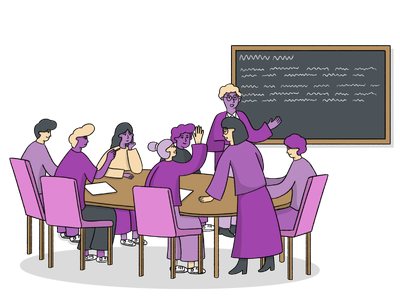
When You Understand What Humans Instinctively Seek in Social Settings, You Have the Foundations for Successful Behaviour Management in Any Classroom
- ✅ Take your staff on a journey of discovery, centred on the core needs all humans seek to fulfil in any social setting. Let Mike unlock the secret forces underpinning human behaviour and listen as he explains how these hidden drivers fundamentally influence what happens in our classrooms.
- ✅ Give your teachers the opportunity to critically reflect on their own experiences and the scenarios they face in their teaching. Watch as Mike helps them connect these to the underlying needs learners are trying to fulfil in their lessons.
- ✅ Let Mike walk staff through his Four Golden Principles of Positive Behaviour Management. These practical starting points are the cornerstone of any teacher’s approach to effective behaviour management. A foundation every teacher can return to, in any lesson they are teaching, and use to guide their decision-making.
- ✅ Explore more than two dozen tried-and-tested strategies teachers can use to engage learners, build rapport and maintain excellent behaviour. All of which are grounded in the golden principles, and which help teachers respond positively, firmly, and consistently, whatever the behaviour in front of them.
- ✅ Understand the central role consistency plays in positive behaviour management, and why focussing on this nearly always yields disproportionately strong results. Making teachers and learners happier, less stressed and better able to focus on the real reason we’re all in the classroom: meaningful teaching and learning.
Tactics are great, but strategy needs to come first.
And, before that, principles.
A lot of behaviour management falls down because teachers lack clarity in their minds about what they are trying to achieve over the long-term, and how to build an approach that is consistently effective.
The best behaviour managers have certainty in their minds over what they want, and then communicate this to learners over and again.
Tactics are the tools we use to manage behaviour in the moment.
Strategy is the overarching goal we’re aiming for.
Principles are what allow us to make consistent decisions that help us to be successful.
On my Positive Behaviour Management That Works training, we look at all three.
And where does this journey begin?
With the necessary first step for all truly successful behaviour management.
Understanding human nature.
When we know the fundamental drivers that make us tick – and that underpin the behaviour of our learners – it becomes much easier to:
- 🎯 Diagnose why negative behaviour is happening.
- 🎯 Pre-empt such behaviour long before it gets out of hand.
- 🎯 Cultivate a classroom environment where learners instinctively know their needs are being met.
The first thing we’ll do together, at the very start of the day, is look at the SCARF model.
A uniquely powerful tool that explains what human beings seek in social settings, what they seek to avoid, and what this means for positive behaviour management.
(And the classroom, let’s not forget, is a social setting.)
From there, we’re all set to look at our principles, our strategy, and our tactics. In that order.


Use Mike’s Expert Guidance to Reinvigorate Your Staff and Set Them on the Path to More Enjoyable, Less Stressful Lessons
Negative classroom behaviour is stressful.
There’s no getting away from that.
One of the most important reasons for mastering positive behaviour management is so that teachers can enjoy teaching more.
We can’t get rid of behaviour.
Children are built to test boundaries. It’s part of what they do.
But what we can do is create an environment in which the energy and instincts that children possess are channelled in positive directions.
An environment in which negative behaviour draws clear and unambiguous consequences that are consistently and fairly applied.
One in which praise is used extensively, but also genuinely, to positively reinforce the behaviours we want to see.
And one in which rapport is at the heart of teacher-learner interactions.
If we bring this together with tried-and-tested strategies to call on if things go wrong, behaviour management becomes a positive, proactive process.
Not a stressful reaction to unwanted events.
This is what I focus on in my Positive Behaviour Management That Works training.
My goal is to give your teachers the principles, strategy and tactics they can use to positively manage behaviour, realistically and consistently, with the learners in your school.

At the start of the day, we’ll explore the SCARF model in depth, thinking critically about the nature of human behaviour.
We’ll look at each element in turn – Status, Certainty, Autonomy, Relatedness, and Fairness – and see how these instinctive needs we all possess influence our behaviour, as well as the behaviour of every child we teach.
Together, we’ll think about the role these factors play in our own lives, before flipping the focus and examining how children may behave when they feel one or more of these needs are threatened.
For example, perceived threats to status are a huge driver of negative behaviour seen in classrooms.
Whether learners are consciously aware of this or not doesn’t really matter.
If a learner feels they cannot gain status in a classroom through the routes available to them, they will often find their own route (like playing the clown, or drawing negative attention to themselves) or seek to avoid the situation (like continually asking to go to the toilet, or withdrawing from the learning).
Here we see the link between core human needs, and the negative behaviour that may arise in the classroom.
But what we also see, is how to fix it.
How to stop such situations arising in the first place.
How to take control and be proactive around behaviour.
Instead of reacting to something that feels like it has no clear cause or driver.
Next, I’ll share my Four Golden Principles of Positive Behaviour Management.
These come from plenty of real-world experience, and are firmly rooted in the findings of the SCARF model.
Then, we move onto tactics. The practical strategies we use to manage behaviour in the moment, including:
- 🎯 A subtle language tweak that sends learners a signal they have already agreed to behave in the way you would like them to behave, helping you to reinforce positive behaviour, before it’s even happened.
- 🎯 The number one way of framing any response to negative behaviour. This method perfectly models how we want learners to think about their actions, and always ensures they have the opportunity to do what’s right.
- 🎯 Exactly what kind of praise you need to avoid if you want the positive things you say to learners to be believed. If you can steer clear of this, you’ll go a long way to ensuring you never undermine the positive praise you give.
- 🎯 Why getting things out of proportion is almost guaranteed to make any situation worse, and why perceptions of fairness in the classroom are more influential than the reality of whether things are fair or not.
- 🎯 A wonderful metaphor any teacher can use to think about negative behaviour, the energy it sends out into the classroom, and how to deal with this in a way that calls learners back to the learning and the true focus of the lesson.
Secure Mike’s Positive Behaviour Management That Works Training for Your Staff Now
Or CALL NOW to secure your dates on 0333 404 7259


Principles. Strategy. Tactics. In That Order.
A full-day with Mike will help make behaviour management in your school a win-win for staff and learners, instead of an ongoing challenge that sucks energy away from teaching and learning.
Here’s an example of a full-day schedule:
- 9.00 – 10.30: Session 1 – Human Nature and Classroom Behaviour
- 10.30 – 11.00: Break
- 11.00 – 12.30: Session 2 – Principles and Tactics for Successful Behaviour Management
- 12.30 – 13.15: Lunch
- 13.15 – 14.30: Session 3 – Tactics Continued and Scenario Assessment
- 14.30 – 14.45: Optional Break
- 14.45 – 15.15: Session 4 – Sharing Practice, Reflective Plenary
The first session sets the scene.
This is where we get into the SCARF model and think critically about how it relates to the behaviour we see in the classroom.
We’ll look at each element in turn, examining how Status, Certainty, Autonomy, Relatedness and Fairness all have their role to play in diagnosing and understanding where negative behaviour comes from – and how we can pre-empt it.
After our morning break, I’ll introduce my Golden Principles, showing colleagues how these connect to the SCARF model and how we can use them to inform our overarching strategy for positive behaviour management.
Next, we start looking at tactics.
These are the specific strategies and techniques we can use to manage behaviour and to cultivate the classroom atmosphere we want.
One that puts learning front and centre.
Across the second and third sessions, we’ll look at five key areas:
- 🎯 How to build rapport and put positive relationships at the heart of learning.
- 🎯 Why you need to use language to shape how learners think and act.
- 🎯 The best ways to utilise sanctions – and what you must always seek to avoid.
- 🎯 Understanding the power of praise to drive positive outcomes.
- 🎯 Powerful strategies to use when responding to poor behaviour during or outside a lesson.
For each of these, I’ll share half-a-dozen of the most reliable strategies, giving colleagues a toolkit of techniques they can take back to their classrooms with them.
We conclude the third session by examining common behaviour scenarios, including ones suggested by colleagues, and applying to these what we’ve looked at through the day.
This gives staff a final opportunity to reinforce their learning, as well as the connections they’ve made between my input and the day-to-day work they do with learners.
Finally, we finish up with a reflective plenary.
This sees me drawing the themes of the day together, and giving staff a chance to reflect on what they want to take away and start implementing in their work, to develop and enhance how they manage the behaviour of their learners.
Interactivity is Key
Whenever I deliver positive behaviour management training, I always begin from the premise that teachers are skilled, experienced professionals.
They don’t need to be told what to do.
They need access to what works, to understand why it works, and to think about how it could work for them, in their classrooms.
To be given the space to discuss and reflect on their own practice, and the ideas and strategies I share.
That’s why my training always favours a 50/50 balance.
Fifty percent expert input from me.
And fifty percent interactive discussion, professional reflection, and trying out strategies for real, to see what they feel like and how they work for learners.
This is the method I use when leading Positive Behaviour Management That Works.
It’s a method that recognises the status of staff, gives them autonomy, creates a feeling of fairness, helps build relatability between me and them, and adds certainty by delineating the time we spend together.
Which, to put it another way, means I always try to practice what I preach.
What is included in a full day of Positive Behaviour Management That Works INSET, Training or CPD?
All bookings include:
- ✅ A full day of CPD, as outlined above, with the option to tailor sessions and messages to match the current priorities of your school.
- ✅ Full access to all resources used on the day, including copies of the slides for internal use.
- ✅ The right to film the training and to subsequently store and share this within your school.
- ✅ One-to-one SLT support, either on the day or via TEAMS/phone, in which Mike will walk you through proven strategies for maintaining momentum around positive behaviour management for 12+ months after the training is completed.
- ✅ A dozen copies of my book How to Manage Behaviour in the Classroom: The Complete Guide, to share with staff.
For half-day and twilight INSET or CPD, we focus on the expert-led sessions from Mike, and remove the implementation and plenary sessions from the agenda.
Everything else listed above is included in half-day and twilight bookings.
One input from Mike and, if you follow his guidance on how to maintain momentum around developing positive behaviour management, you’ll have scope for 12+ months’ sustained impact in your school.
Plus, an exclusive bonus to celebrate the launch of my newly developed CPD platform, Mike Gershon’s Effective Teaching and Learning.
- ⭐ All full-day courses booked in 2026 will receive three complementary one-year memberships to the platform, worth £1,966.
- ⭐ Choose any three members of your school’s leadership team to receive these memberships.
- ⭐ They will gain access to everything on the platform for a full twelve months, including thirty courses covering ten key areas of teaching and learning, practical guides, big picture videos, a growing webinar library, and resources covering how to support ASD learners in mainstream classrooms.
- ⭐ Over 3,000 teachers were part of the first version of the platform. Version two provides a bigger, better, more intuitive experience that three members of your leadership team can enjoy as part of this exclusive, time-limited celebration.
- ⭐ Key areas covered on the platform include Feedback, Metacognition, Differentiation, Scaffolding and Modelling, Independent Learning, Assessment for Learning and more.


World-Leading Expertise on Practical Teaching and Learning That Works
Five reasons you can rely on Mike to deliver expert training and practical guidance for your staff.

- ✅ Mike has worked with more than 700 schools, delivering inspiring in-person training to over 35,000 teachers.
- ✅ Mike is the author of forty books on teaching and learning, including numerous bestsellers, that have sold in excess of 160,000 copies worldwide.
- ✅ Mike’s teaching resources have been viewed and downloaded more than 4 million times by teachers in over 180 countries and territories.
- ✅ Mike has been working with schools, governments and regional authorities continuously since 2010.
- ✅ Mike has supported over 3,000 teachers online through his bespoke CPD platforms, including Mike Gershon’s Effective Teaching and Learning, the only professional development platform built on Mike’s expertise and prioritising teacher autonomy.
Frequently Asked Questions
Do you do half-day and twilight training?
Yes. I offer both and recognise the flexibility schools sometimes need around their calendars. Half-day and twilight CPD focuses on expert input from me. We remove the teamworking and plenary sessions to accommodate this.
Do you offer follow-up packages?
Yes. Many schools I work with ask me to come back and work with them again, to support them in their developmental journey. Follow-up options include further training, supportive observations with constructive feedback, paired observations and SLT coaching.
We’re a small primary school, can we still work with you?
I always hold back a few dates each year for small primaries, recognising the challenges the smallest schools face in accessing high-quality training. We can also work around tight budgets by looking at online options and in-person training involving multiple schools. The smallest primary I’ve worked with had four teachers – and we had a great day together!
We’d like to look at online training. Is that something you offer?
Yes. It is not my preference as I believe that in-person is always better, and includes elements that can’t be replicated online. However, I do provide online training for schools where in-person may be difficult due to geography, time zones and other factors. My one rule for online is that staff must sit together so that I can facilitate discussion and interaction just as I do when delivering in person.
How far are you willing to travel?
I travel across the UK and overseas from my base in York. Far flung visits have included Shetland, Cornwall, Scotland, Northern Ireland and Pembrokeshire. Even further flung visits have included Romania, Norway, Italy, Bahrain, Kuwait and The Falkland Islands. Trips that require extensive travelling attract a higher cost to cover additional time and mileage.
Can we book you in conjunction with another school?
Yes. Many smaller schools opt for this approach. Sometimes this sees two or three primaries joining up for a full-day session, sometimes a cluster of schools combine budgets and I work with them over an extended period. Occasionally schools ask if they can book me and then sell tickets to the event to nearby schools to cover costs. That is also fine with me.
Is the training relevant for all age groups?
Yes. I have worked with hundreds of primaries, hundreds of secondaries, and dozens of FE colleges over the years. I present in a curriculum agnostic way, using examples that are relevant for the audience in front of me and the age group they teach. A big part of all my training is giving colleagues the opportunity to think about how they can take the ideas and strategies I present and use them with the learners they know best.


Start Changing How Your Staff Think About Behaviour in the Classroom Today With Mike’s FREE Positive Behaviour Management Knowledge Base
Get a head start on developing how teachers manage behaviour in your school by exploring my Positive Behaviour Management Knowledge Base and sharing it with your staff.

The Knowledge Base features 48 blogs and articles adapted from my hugely popular book How to Manage Behaviour in The Classroom: The Complete Guide.
You’ll find guides, explanations and practical strategies covering:
- 🎯 What is behaviour?
- 🎯 Norms, Values, Roles and Status
- 🎯 Rules, Boundaries and Consistency
- 🎯 Planning for Learning
- 🎯 Using Praise
- 🎯 Eliminating Low-Level Disruption
- 🎯 Creating Engagement
- 🎯 Building Rapport
- 🎯 Solving Common Behaviour Problems
So enjoy – I hope you and your team find it useful!
P.S. Don’t forget, when I deliver my Positive Behaviour Management That Works training, the emphasis is always on making life simpler and easier for your teachers, so they can adapt, develop and enhance their practice in ways that work.


